


News
Natural Growth-Fresh Harvest
Undaria pinnatifida | Nutritious "vegetables" from the deep sea"
2024-10-18
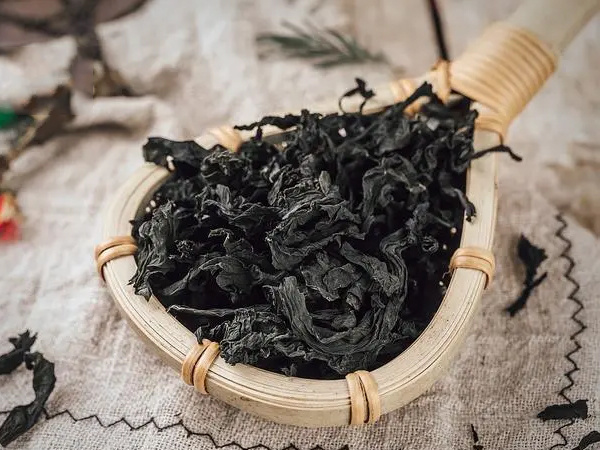
Undaria pinnatifida, also known as pinnatifida and sea mustard, is a temperate algae plant, mainly distributed in the coastal areas of China. Its leaves are pinnate lobes, shaped like a skirt, hence the name. Undaria pinnatifida is not only delicious, but also rich in iodine, calcium, iron and other minerals and vitamins, known as the "king of seaweed".
Undaria pinnatifida is originally a unique algae species on the west coast of the North Pacific Ocean. Due to world trade and ship transportation, the germ cells of Undaria pinnatifida attached to oyster shells or existing in ballast water have spread to other parts of the world. Undaria pinnatifida has been found in France, Britain, New Zealand and Australia. my country is the world's most important producer of Undaria pinnatifida. In 2022, my country's output of Undaria pinnatifida will reach 206000 tons (source: "2023 China Fisheries Statistics Yearbook", based on dry weight). Liaoning and Shandong are the main production areas of Undaria pinnatifida in my country.
Undaria pinnatifida is an annual seaweed, and its life history contains two generations of large sporophytes and microscopic gametophytes. Because there are obvious differences in size and appearance between the two, it is called this life history as a hetero-generation alternation. On reefs along the northern coast such as Qingdao, we usually observe more obvious seedlings of Undaria pinnatifida after the end of winter (January and February). We call this large fronds sporophyte. We breed and eat the sporophyte of Undaria pinnatifida.
The normal sporophyte is a diploid and is a nonsexual generation in the life history of Undaria pinnatifida, I .e., it has no sex and does not exhibit sex differences or differentiation. When the sporophyte grows to the breeding season (usually after June in the north), its spore leaves will release spores that can swim, and the spores will attach to reefs and other attachment bases to form haploidy gametophytes. In nature, due to the small number of cells, the individual is small, the naked eye can not be observed.
The common gametophyte has a sexual differentiation between female and male and is therefore a sexual generation. We know that XX and XY type sex chromosomes determine the sex of human female and male respectively, while the sex of haploid gametophyte of kelp, Undaria pinnatifida, Shuiyun and other brown algae is determined by U and V type sex chromosomes, with U type chromosome being female and V type chromosome being male.
The traditional view is that the haploidy of Undaria pinnatifida is only female and male, and is dioecious. However, researchers from the Seaweed Germplasm Bank of the Institute of Oceanography of the Chinese Academy of Sciences discovered for the first time the phenomenon of hermaphroditism in the single-fold Undaria pinnatifida gametophyte. This gametophyte shows male morphological characteristics in the initial vegetative growth stage, but it can simultaneously form sperm sacs and oocysts in the induced gametogenesis stage, and then produce sperm and eggs respectively. Later, they further verified that the eggs produced by haplogametophytes of the hermaphroditic sex had normal biological function, thus confirming the existence of hermaphroditic sex in haplogametophytes. Later studies found that this hermaphrodite phenomenon is not rare, in the cultivation and breeding groups have a higher proportion of the existence.
In summary, Undaria pinnatifida haploidy gametophyte generation with female, male, hermaphrodite 3 sex.
Key words:
Previous:
Next:
Related News
The practice of wakame bean curd soup
2024-10-18
Pregnant women can eat Undaria pinnatifida
2024-10-18
Nutritional Value of Undaria pinnatifida
2024-10-18
2024-10-18

A professional production and sales of dried Undaria pinnatifida factory
E-mail: songping17@163.com
Address: Renhe Town, Rongcheng City, Shandong Province
Website QR Code